

74% reduction in turnaround time, enabling timely feedback
With GradeChum, results were released within one to three days, reducing turnaround time by 74%.
Download Full ArticleExecutive Summary
Delays in releasing exam results have long challenged faculty at Mapúa University, often limiting timely feedback and slowing academic decision-making. Teachers reported that manual grading cycles could take a week or more, particularly when managing multiple sections and diverse item types. To address this, Mapúa adopted GradeChum, an AI-powered grading assistant that automates the checking of handwritten exams across formats including multiple choice, essays, problem-solving, coding, and diagram-based questions.
This case study evaluates the institution's adoption of GradeChum. 11 teachers across multiple departments who were using GradeChum during the first semester of school year 2025-2026 answered a structured survey.
Key findings below reflect both the platform's capacity to streamline assessment processes and its positive reception among faculty users:
- 100% cited faster turnaround time.
- 73.95% decrease in turnaround time, with most results returned within 2–3 days.
- 82% reported reduced workload.
- 77.39% average reduction in grading time across all item types.
- 51.7% reduction in post-checking score overrides.
Institution Background
Mapúa University is a private institution in Metro Manila, Philippines, recognized for its excellence in engineering, technology, and innovation.
It offers programs from basic education to fully online, undergraduate, and graduate degrees across disciplines such as:
- Engineering and Architecture
- Computer and Information Technology
- Business, Management, and Accountancy
- Social Sciences and Education
Faculty administer a wide range of assessments, such as multiple choice, essays, problem solving, coding, and diagram-based items. Teachers handle an average of 6 sections with 35–40 students each. Each semester includes four major exams: Prelim, Midterm, Pre-Finals, and Finals, with quizzes typically given monthly and seatworks weekly.
Challenges Due to Manual Checking
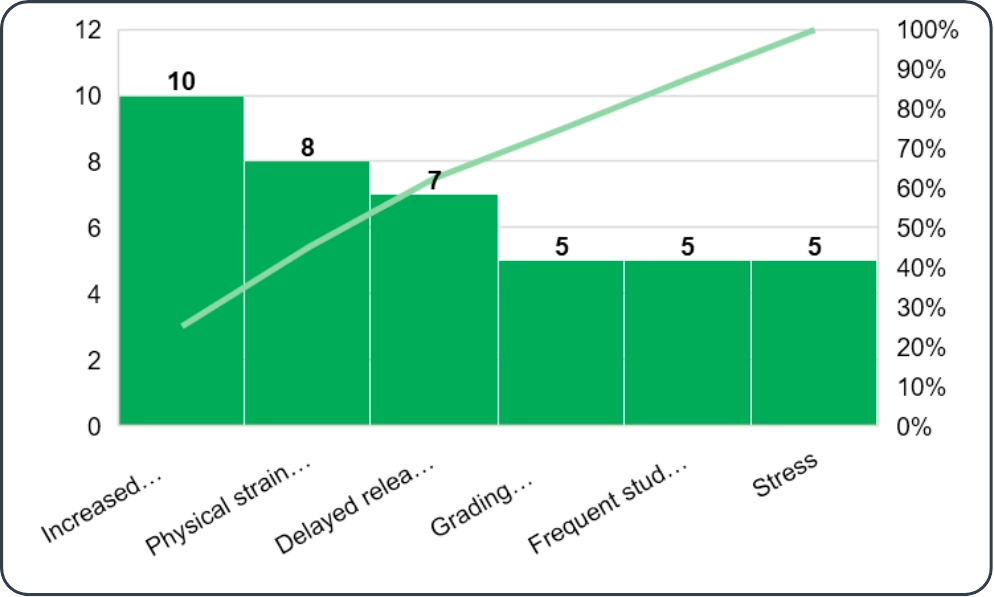
Surveyed Mapúa University faculty highlighted key issues they experienced with manual exam grading:
- 90.91% reported increased workload
- 72.73% cited physical strain, such as eye and hand fatigue
- 63.64% were affected by the delayed release of grades, emphasizing it as a critical bottleneck which impacts feedback cycles and course pacing
- 45.45% reported grading inconsistencies or errors, frequent student re-check requests, and stress
These challenges affected not only grading efficiency but also the timeliness and quality of student feedback—making the need for a faster and more reliable solution urgent.
Key Results & Findings
The findings reveal meaningful gains in efficiency, satisfaction, and instructional support.
Faster Turnaround Time
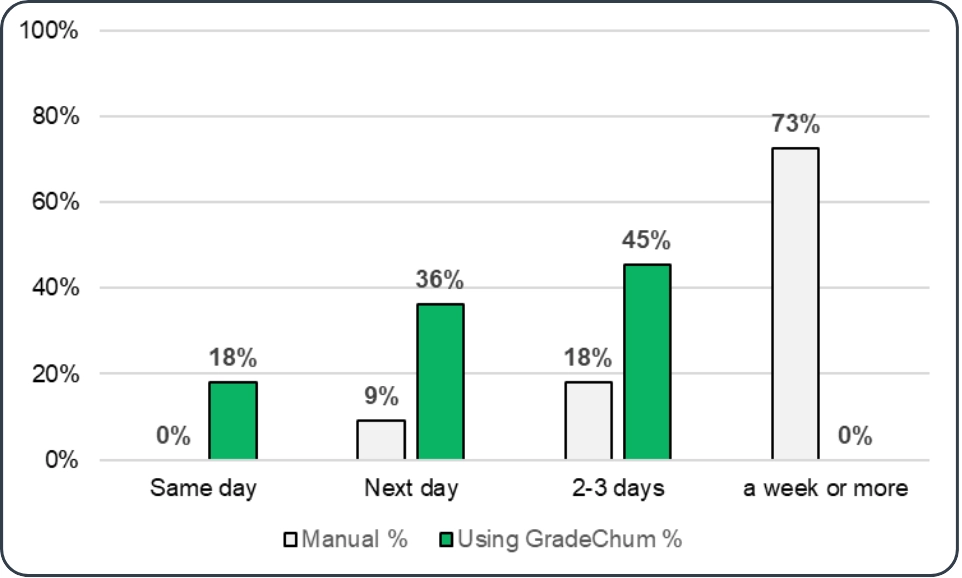
One of the improvements brought by GradeChum to Mapúa University was the significant reduction in turnaround time for releasing exam results.
Prior to using GradeChum, 73% of the teachers took a week or more to return exam results per exam set when checked manually.
With the assistance of GradeChum: 36% reported that the turnaround time was reduced to just one (1) day, 45% reported reduction to just two (2) to three (3) days, and 18% even reported reduction to just less than a day.
This implies that GradeChum reduced average grading turnaround time by approximately 73.95%. From an administrative perspective, faster turnaround times support more efficient academic tracking and helps departments meet internal deadlines such as grade submissions.
Grading Time Saved
This acceleration was made possible by a 77.39% reduction in grading time, with significant reductions across all item types shown in the table below:
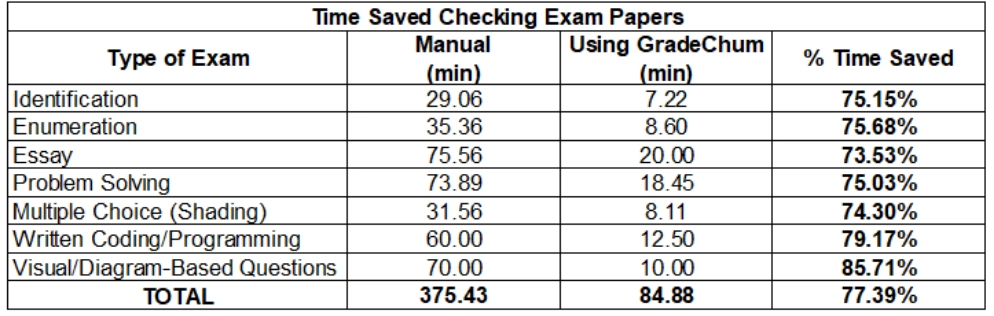
The data is taken from teachers' time estimates they typically spent checking exams in a standardized instructional setting of a single class of 40 students answering various item types.
On average, teachers spent a total of 375.43 minutes manually grading each exam set across these item types. With GradeChum, this dropped to just 84.88 minutes, resulting in an average time savings of 290.55 minutes per set, or a 77.39% reduction.
Extrapolating this across a teaching load of 6 sections with 40 students each, and using standard item distribution models, the estimated grading time per semester dropped from 614.67 hours to just 138.58 hours. This means each teacher recovered approximately 476 hours per semester, which can be redirected toward any of the following professional tasks:
- Prepare 3 additional fully developed lessons
- Participate 12 extracurricular activities
- Conduct 12 more student consultations or collaborative meetings
- Have 397% progress of 1 research output
- Produce 12 accreditation-related documents
- Attend up to 8 training or upskilling sessions
Reduction in Score Overrides
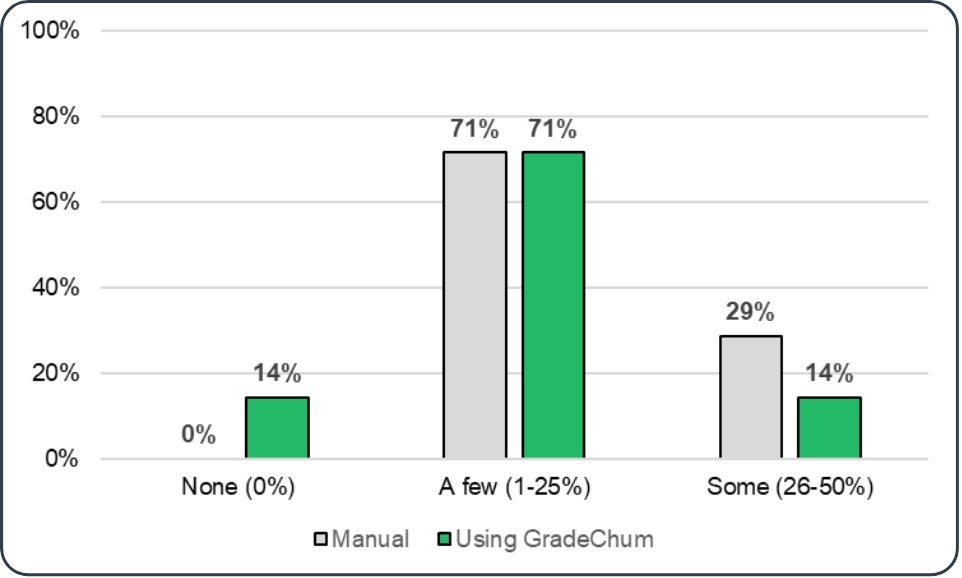
The results also show a measurable improvement in grading accuracy and trust in automated scores with GradeChum. Under manual grading, 71% had to revise 1%–25% of submitted scores and 29% adjusted 26%–50%.
With GradeChum, the need for heavy rechecking diminished: 14% of teachers reported making no adjustments, but 71% remained revising 1%–25% of the scores, and 14% adjusted 26%–50% of scores.
This indicates that GradeChum helped reduce recheck volume overall, a 51.72% reduction in the number of teachers reporting high levels of post-checking score overrides after adopting GradeChum.
This improvement in scoring consistency directly supported faster turnaround times. With fewer disputes and corrections, teachers were able to finalize results earlier which contributes to the observed reduction in exam turnaround delays.
Teacher Feedback & Satisfaction
Feedback from teachers who used GradeChum indicates high satisfaction and perceived benefit. On a scale of 1 to 5, the average rating for how much easier exam checking became was 4.36.
82% of the respondents rated the ease at 4 or 5, citing reduced effort, faster checking, and less cognitive fatigue.
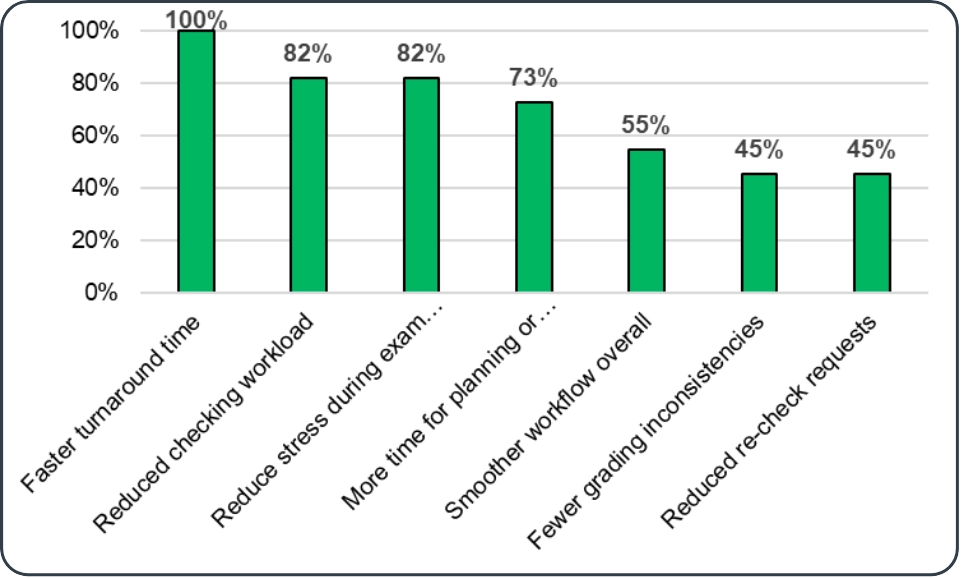
Teacher feedback at Mapúa University strongly affirmed GradeChum's positive impact on their grading experience. All surveyed instructors (100%) cited faster turnaround time as the most significant benefit, with 82% also noting a reduced grading workload and less stress during exam season.
Additionally, teachers reported improved work-life balance and academic productivity:
- 73% had more time for planning or preparation.
- 55% experienced smoother workflow overall.
- 45% observed fewer grading inconsistencies.
- 45% reported a decrease in re-check requests.
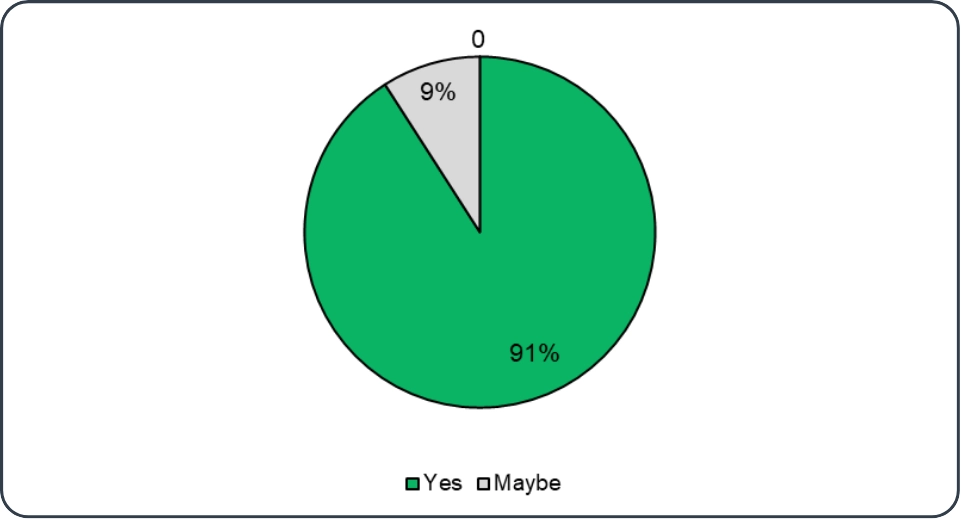
As a result, 91% of teachers expressed intent to continue using GradeChum, while 100% said they would recommend it to other departments or institutions. These results affirm GradeChum's value not only as a grading tool but as a scalable solution trusted by educators.
Testimonials
Teachers shared how GradeChum improved their assessment experience, particularly in accelerating feedback and simplifying their workload.
“It eases the grading part of an assessment.”
“I appreciate how quickly the exam results were released.”
Conclusion
The adoption of GradeChum at Mapúa University demonstrated how AI-assisted grading can dramatically reduce exam turnaround time while also easing teacher workload and improving grading consistency. Faculty no longer face week-long delays in releasing results; most can now provide feedback within a day or two.
This faster turnaround supports student learning, reduces administrative strain, and strengthens the credibility of assessments. With high teacher satisfaction and improved grading workflows, GradeChum has proven to be a reliable, scalable tool for enhancing academic efficiency in a high-volume, high-stakes university environment.
The strong results from this implementation suggest GradeChum's readiness for broader adoption across Mapúa's academic units and other forward-thinking institutions.