The Prompting Formula That Actually Saves Teachers Time (And What That Means for Your Lesson Plans)
What a decade-defining AI study says about the one skill most teachers never got trained in


In 2023, a team of researchers at UC Berkeley ran an experiment with a title that stuck: "Why Johnny Can't Prompt: How Non-AI Experts Try (and Fail) to Design LLM Prompts." They studied people with no background in AI trying to get useful results out of a language model, and found a consistent pattern. Most people didn't write a prompt, evaluate it, and refine it. They typed something, got a disappointing answer, gave up, and typed something completely different instead, essentially trial and error with no system behind it.
If that sounds familiar, you're not alone. It's also, according to the same body of research, entirely fixable.
The Three Words That Change Everything
The UK Government's own Generative AI Framework, published in 2024, boils effective prompting down to three principles: specificity, context, and constraints. That's a short list, but it explains a lot about why "write me a lesson plan" produces something generic, while a more detailed request produces something you can actually use tomorrow morning.
Here's the difference in practice.
Vague: "Create a lesson plan on photosynthesis."
Specific, with context and constraints: "Create a 40-minute lesson plan on photosynthesis for Grade 7 students who are new to the topic. Include a 5-minute hook activity, one hands-on demonstration, and a 3-question exit ticket. Assume the classroom has no lab equipment beyond basic household materials."
The second version gives the AI a role to play, a task to complete, the context it needs to make good choices, and the boundaries that keep the output realistic for your actual classroom. Researchers studying this exact gap describe it as a Role, Task, Context, Format formula, and it holds up across nearly every use case a teacher runs into during a normal week.
Three Prompts Worth Keeping on Hand
For differentiation: "You are a teacher with learners who have [specific need: e.g., limited English proficiency, difficulty with working memory]. Original task: [describe the activity]. Create three versions of this task: one with visual scaffolding, one with simplified language, and one with extended challenge for advanced learners."
For feedback: "Write constructive, encouraging feedback for a [grade level] student who is struggling with [specific skill, e.g., organizing a persuasive essay]. Keep it specific enough that the student knows exactly what to try next."
For assessment: "Create a rubric for a [assignment type] in a [subject/grade] class, with criteria for [the 3–4 things you actually care about]. Keep the language simple enough for students to self-assess against it."
Each of these follows the same underlying shape: tell the AI who it's writing for, what the actual task is, what constraints matter, and what "good" looks like. That structure is what separates a prompt you have to heavily edit from one you can use almost as-is.
Why This Is Worth the Five Extra Minutes
It's tempting to treat prompt-writing as one more thing eating into an already packed day. The research suggests it pays for itself quickly. Industry estimates from McKinsey put the share of a teacher's routine workload that can realistically be streamlined with AI-driven tools at around 20 percent, but only when the AI is actually given enough to work with. A generic prompt produces a generic draft that needs 20 minutes of editing. A well-structured one produces something closer to what you'd have written yourself, in a fraction of the time.
There's also a quieter finding worth knowing about. A 2026 study analyzing nearly 4,000 Reddit posts from teachers and students discussing generative AI found that teachers, far more than students, tend to talk about AI in terms of real pedagogical trade-offs: where it genuinely helps, and where it genuinely doesn't. That instinct, treating AI as a tool with real limits rather than a magic fix, is exactly the mindset the research says produces the best results. The goal was never to hand a task over to AI completely. It's knowing precisely which five minutes of your week are worth automating, and which parts still need you.
Why This Matters Even More in the Philippines
This isn't just an abstract skills gap. In the Philippines, it's already tied to national policy. DepEd's Department Order No. 003, s. 2026 requires teachers to remain the final decision-makers whenever AI is used in the classroom, particularly for grading, where AI tools are officially classified as "high-risk" and only permitted under strict human oversight. That requirement only works in practice if teachers know how to direct AI well enough to get something worth reviewing in the first place. A vague prompt that produces a vague draft doesn't just waste time, it makes the human-oversight step harder to do well.
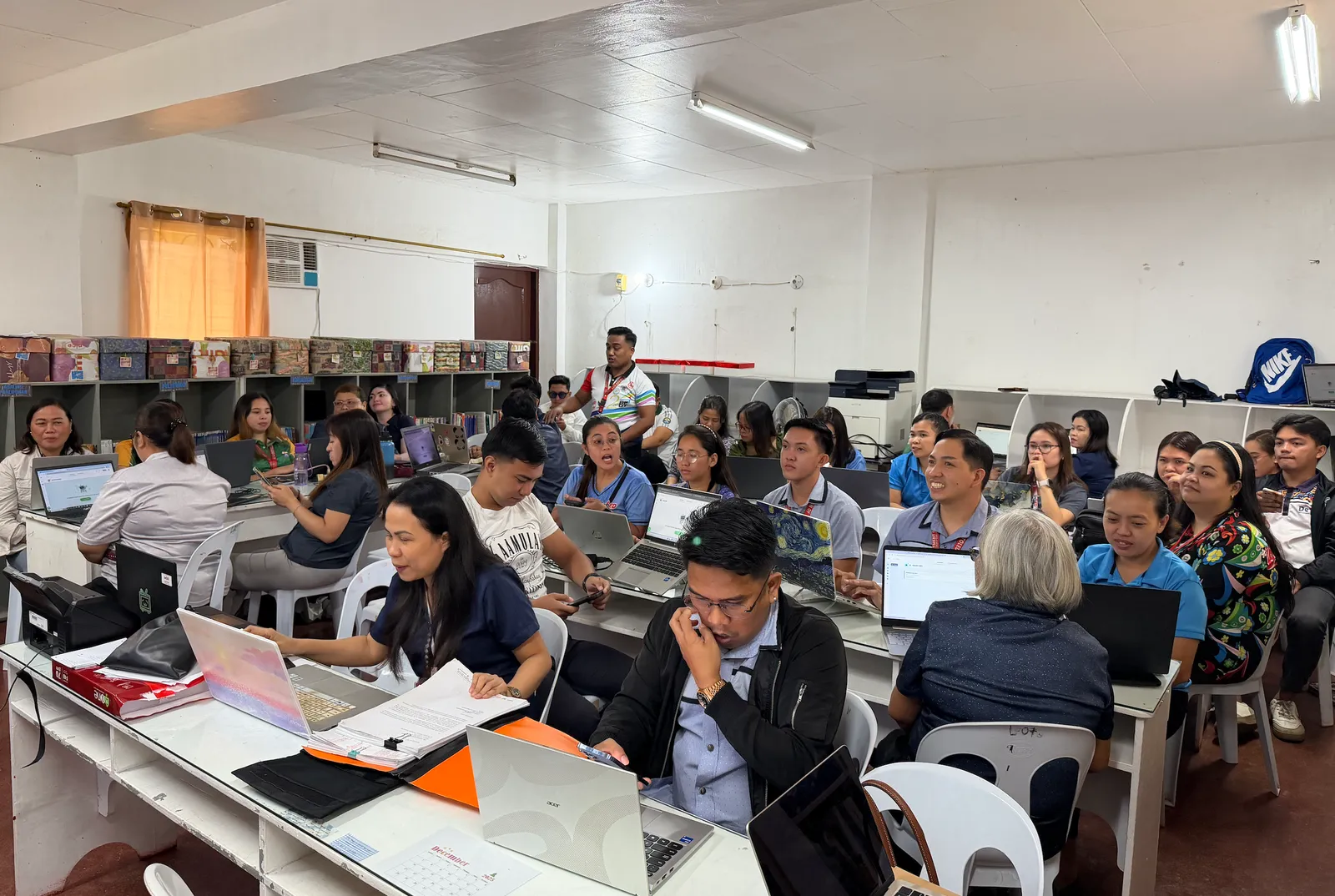
DepEd has also put real weight behind closing that gap. Alongside DO 003, the department rolled out a national AI skills training program built with the ASEAN Foundation and Google.org, aiming to reach 300,000 teachers nationwide as part of Project AGAP.AI. The scale of that investment is itself a signal: prompting well isn't a nice-to-have skill for Filipino teachers anymore. It's quickly becoming part of the job description.