A Class Averaged 96 on a Take-Home Exam. In Person, It Dropped to 48.
Inside the number gap that blew open an Ivy League cheating investigation, and what it means well beyond Brown


Roberto Serrano has taught economics at Brown University for 34 years. In 2026, after nine Brown students were injured in a campus shooting, including two of his own, he made a compassionate call: he'd give his ECON 1170 midterm as a take-home exam, closed-book, on the honor system, with an eleven-hour window for a test designed to take two.
The results came back almost too good. The midterm's mean score was 96, the median around 98, with roughly 40 perfect papers in a class the professor had deliberately designed to be harder than his usual midterms, whose historical averages ran between 65 and 80. Students who'd studied together turned in papers with identical wording and identical errors.
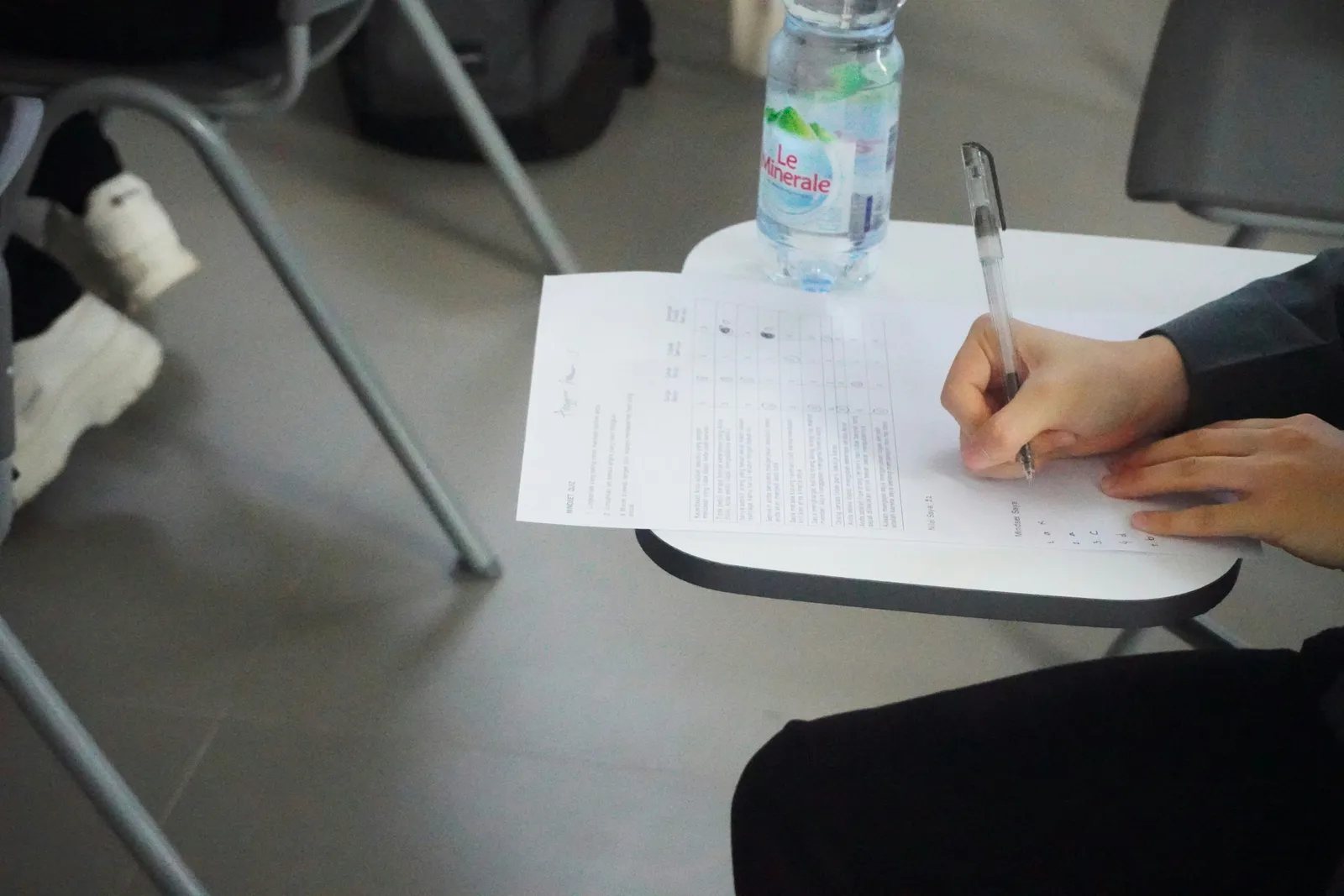
Serrano switched the final exam to in-person, closed-book, three hours, no devices. Eighteen students dropped the course outright. Nine more skipped the final entirely. Among the students who stuck it out, the average score collapsed to 48.
The Gap Itself Is the Story
It's rare to get a number this clean. The same students, the same course, the same professor, separated only by whether AI was reachable during the exam, and a 48-point swing in between.
Serrano, who has been blind since age 17 and is known among students for his sharp wit, didn't mince words about what he thought had happened. Students who leaned on AI to beat a take-home exam, he said, had made "a very basic strategic mistake": gaming a game theorist while assuming no one else would think to do the same thing. In a separate interview, he drew a harder line about what AI use should never cross: "the line should be drawn if a user of AI essentially is choosing to become an idiot and stop thinking."
What frustrated Serrano most wasn't the cheating itself. It was what came after. He described Brown's administrative response as "meek," and said he felt pressured into filing individual complaints against each suspected student, with evidence attached, rather than the university treating the pattern as an institutional problem.
Brown's academic code committee opened a formal investigation only after Serrano went public with the story in late June, which he said he was "appreciative" the university was "finally looking at."
This Isn't a One-Off. It's a Pattern With a Name.
What happened in ECON 1170 lines up almost exactly with what researchers have been finding at a larger scale all year. A 2026 study out of Chinese secondary education found that AI use measurably improves homework completion while actually decreasing exam performance, a trade-off researchers have started calling a genuine AI learning penalty. The OECD's 2026 Digital Education Outlook reached a similar conclusion from a different angle: AI used without real engagement can raise a score on a task while producing zero gain in actual understanding.
Brown's class is what that research looks like with real names attached. Ninety-six became the ceiling AI could help reach. Forty-eight was what remained once it was taken away.
What This Means for the Philippines
The same dynamic plays out in the Philippines, with one added complication that makes it harder to catch here than at Brown.
The Commission on Higher Education has issued no national guidelines on how Filipino universities should handle generative AI in coursework, leaving individual professors to set their own policies the way Serrano did at Brown, case by case, often only after something goes wrong. And where Brown eventually caught its discrepancy by comparing take-home scores against an in-person retest, Philippine institutions face a harder detection problem even when they try: a local test of two widely used AI detectors, ZeroGPT and Copyleaks, found they misidentified half of genuinely handwritten Filipino student essays as AI-generated, a bias rooted in the fact that these tools are trained mostly on native English writing patterns. A Serrano-style discovery, students scoring suspiciously well on unsupervised work, is useful evidence anywhere. But the tools meant to confirm or rule out AI involvement specifically misfire on the way Filipino students write English, which means the easy fix (run it through a detector) is less trustworthy here than almost anywhere else this story has played out.
That gap is exactly why DepEd's Department Order No. 003, s. 2026 leans so heavily on human verification rather than algorithmic detection. The order classifies AI tools used for grading as "high-risk," permitted only with a teacher in the loop making the final call, not a detection score doing it for them. Brown's story is a version of that same principle learned the hard way: the take-home score alone couldn't be trusted. It took an in-person, teacher-verified exam to find out what students had actually learned.

(GradeChum scans student answer sheets and gives teachers a detailed breakdown with feedback.: www.gradechum.com)
That's the same model GradeChum is built around. It isn't trying to catch AI after the fact with a detection algorithm prone to the kind of false positives that misfire on Filipino English. It scans handwritten, in-person work, the kind Serrano eventually had to switch to, and keeps the teacher's judgment, not an automated flag, as the final word on every score. Brown needed a 48-point gap to prove its take-home exam couldn't be trusted. The more sustainable fix is making sure the grade was verified honestly the first time.